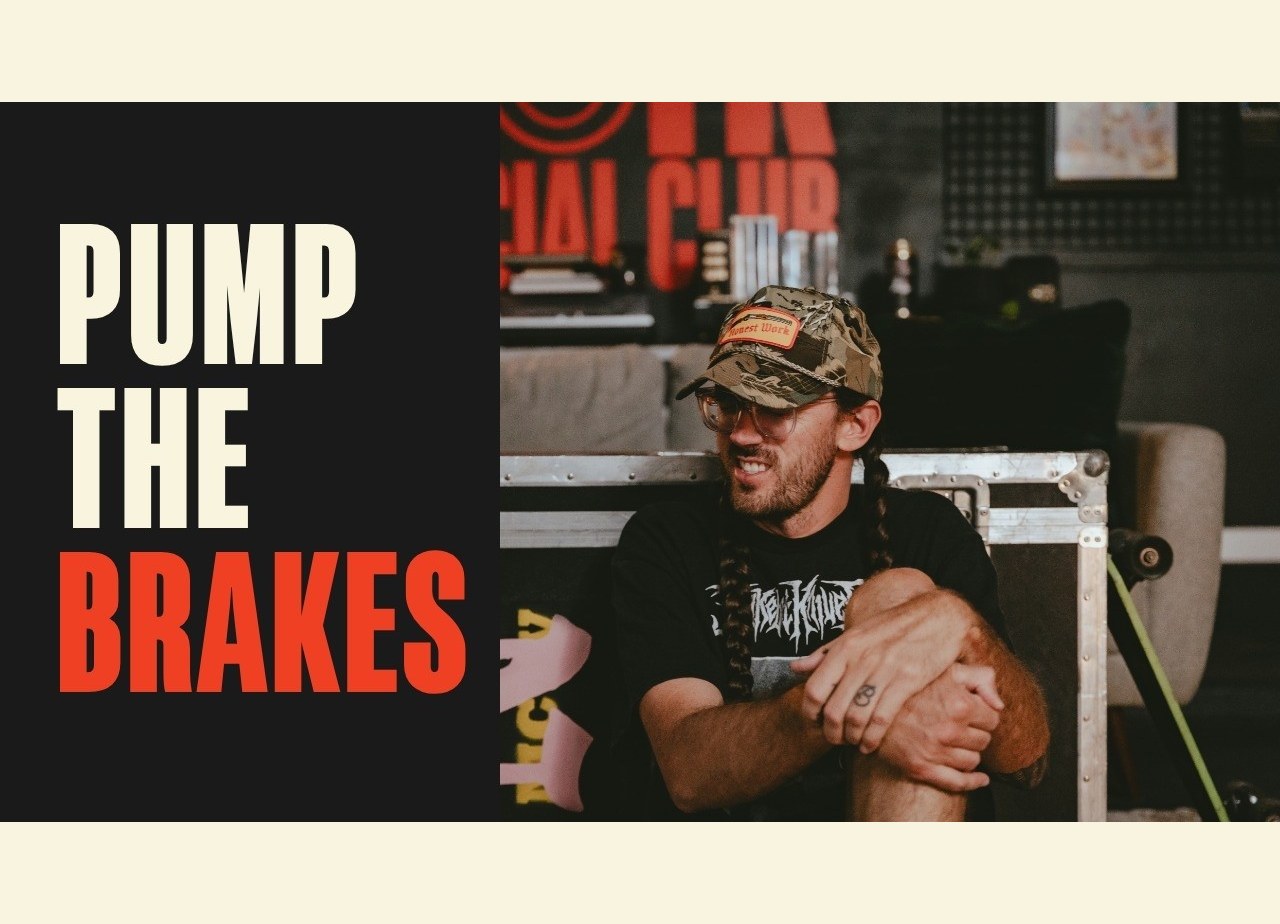
You just got the keys to your dream shop. The paint swatches are taped to the wall, a designer is waiting on your logo deposit, and a box of business cards is already in your cart. Pump the brakes.
There’s one step most new business owners skip, and it’s the one that decides whether everything else works: build your brand first. Not the logo. The brand. The logo, the paint, the signage and the cards all come out of it, so doing them first is like framing walls with no foundation underneath.
Here’s how to do it, using three of the 21 questions we run every client through when we build their brand.
Your Brand Is the Foundation, and Your Logo Comes Last
Steven’s favorite analogy is the foundation of a house. The concrete pour itself is fast. The work before it is not: measuring, digging, forming, laying rebar, then letting it cure. Nobody tells the foundation crew to hurry, because everything else sits on top of it.
Once the foundation is done, the framers, electricians, roofers and painters all show up at once and the house goes up fast. Your business works the same way. Spend real time on the brand, and the logo, website, signage and marketing come together fast, because every decision already has an answer.
This happens all the time. A friend of Steven’s was opening a business with a polished, feminine feel. Before he knew who he was selling to, he’d already planned a cut metal sign to hang above the door. The customer he was most likely talking to (an upscale, possibly older woman) probably didn’t want metal over her head at all. She wanted something soft and pretty, maybe a cursive mark with a flower. That’s money and time spent on a guess.
Bottom line: if you can’t name your customer, every dollar you spend on visuals is a guess.
Question 1: Why Did You Start This? (Your Mission and Tagline)
This is your mission statement and tagline rolled into one. Most people avoid it because it asks you to be vulnerable, and that’s exactly why it works.
How to answer it:
- Word vomit first. Get everything out of your head and onto paper. Don’t edit yet.
- Go past the polite answer. “I wanted to be my own boss” is a start. What made it urgent? What were you sick of? What did you want to build that didn’t exist?
- Then cut it down. Pull one clear paragraph (your mission) and one short line (your tagline) out of the mess.
For Dork, the answer is the guy Steven was 10 years ago: sick of working for someone else, ready to build a business that actually stood out, and short on people to show him how. Dork Social Club exists for that person.
Why does this matter for sales? Because people buy from people they connect with, and your story is the connection. If you can’t get behind why you started, why should anyone buy from you?

Question 2: What Do You Do, and Who Do You Do It For? (Your Ideal Client)
The “what” is the easy half. Branding and marketing. Custom skateboards. Original art. You already know it.
The “who for” is the most important two words in this whole exercise. Your ideal client has to feel like a real person, so give them:
- A name, an age and a birthday
- Hair color and eye color
- A favorite music genre and a top five playlist
- Their own Pinterest board
- Their problems, their highs, the things they love
- Their life situation (married or not, kids or not, what their day looks like)
Ours is Zephyr, a nod to the Zephyr skate crew from Dogtown. We’ve done so much detail work on him that we can picture him, and our favorite clients start to look a lot like him.
Go deeper: once your ideal client is written down, use them as a filter. Brianna builds clients a Pinterest board for their ideal client, with their favorite music. Clients told us that board means they never have to guess which trend or audio to use for an Instagram post again. They just ask, “Would our person love this?” That one board turns into a gut check for every post.
Question 3: What Are Your Values? (How You Hire, Price and Say No)
If you don’t stand for something (and ruffle a few feathers), people won’t stand with you.
Values aren’t a break room poster. They make real calls in your business:
- Hiring: who you bring on, and why.
- Letting people go: what’s a dealbreaker.
- Pricing: the dollar amount you won’t work below, because of what you believe your work and your company are worth.
Try this: pick three to five values. For each one, write down one decision it would change. If a value doesn’t change a single decision, it’s decoration. Cut it or sharpen it.
Write It Down and Take Weeks, Not Minutes
Entrepreneurs are great at winging it. That’s a strength in a sales call and a weakness here. “Yeah, I kind of know who my customer is” is not a brand.
A simple process:
- Answer all three questions in long form.
- Walk away for a few days.
- Revise. Then revise again.
- Turn it into a short brand guide you’ll actually reread before you make a logo, a website or a post.
Give it weeks. The foundation crew takes their time, and nobody rushes them.
Know Your Client Before You Spend a Dime
Here’s your order of operations if you’re starting (or restarting) a business:
- Why you started (mission and tagline)
- What you do and who for (ideal client)
- Your values
- Then the logo, colors, website, signage, cards and lease decisions
Do it in that order and everything you build speaks to the same person.

Not Sure Where to Start? Take the Dork Build Bold Quiz
You just answered three big questions about your brand. Now find out which part of it needs the most work. The Dork Build Bold Quiz is free, takes a few minutes, and shows you exactly where to start.
Take the free Dork Build Bold Quiz and find out where your brand stands.
